Materials
Five materials,
chosen for the long run
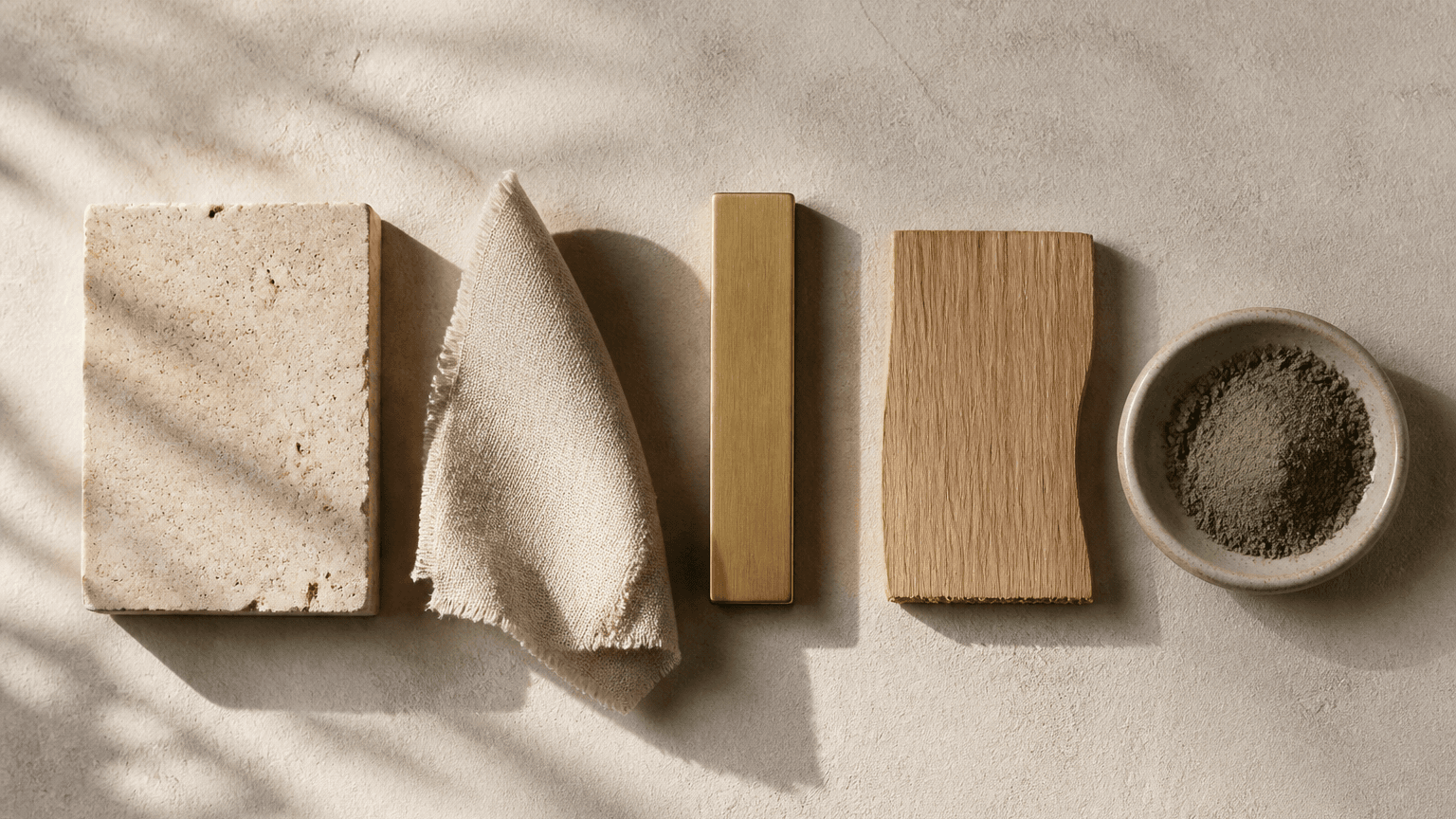
We keep a short palette on purpose. Working with the same handful of materials year after year means we know exactly how each one is made, how it is installed, how it wears, and what it costs to put right.
Nothing here is chosen for a photograph. Every finish on this page is specified because it improves with use rather than needing to be protected from it.
The Palette
What we use, and why we keep using it
Floors, joinery, furniture
White oak
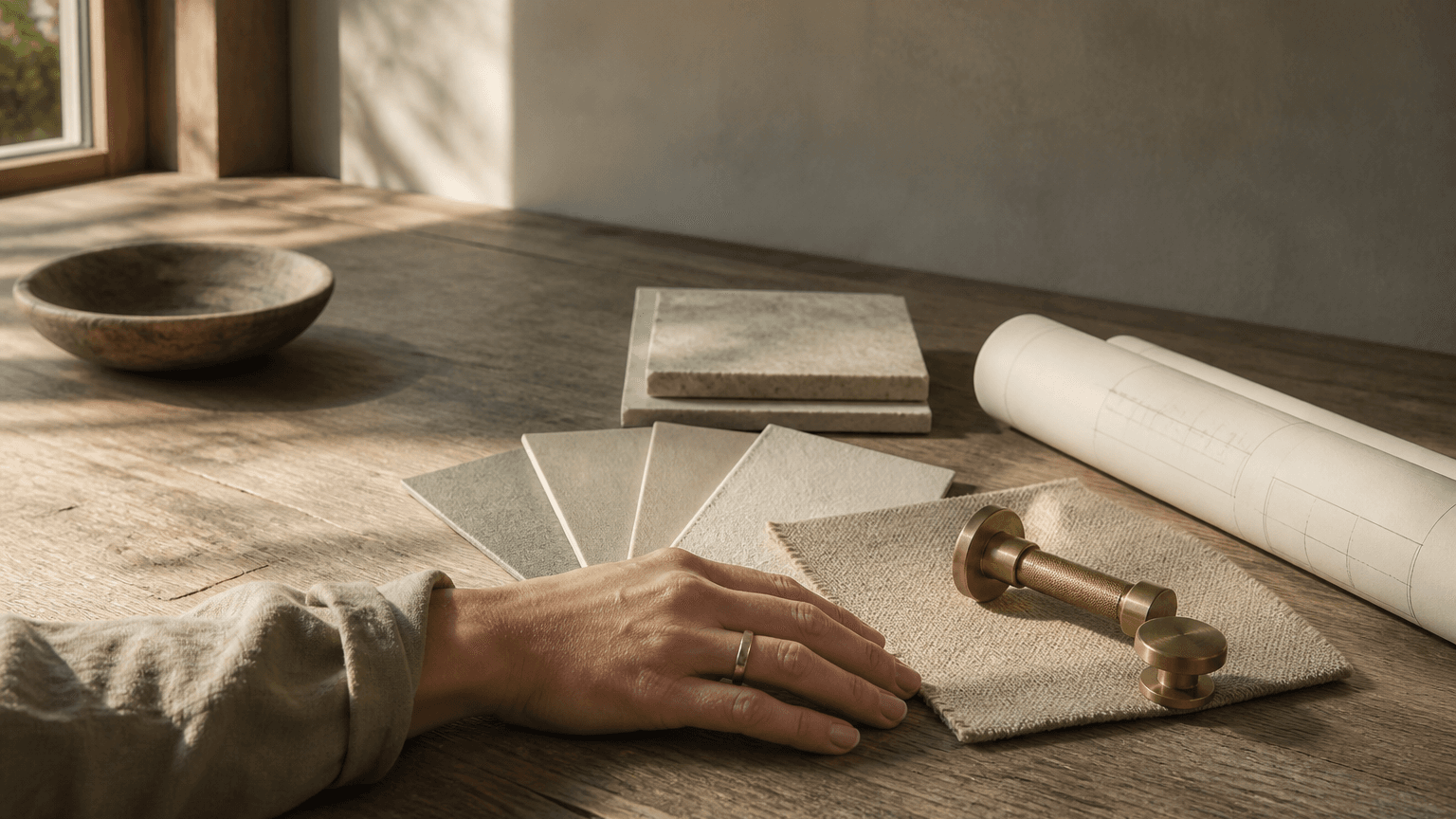
We specify rift sawn boards for their straight, quiet grain, then finish them with hard wax oil rather than lacquer. Oil sits in the timber instead of on top of it, so a scratch can be spot repaired in an afternoon and the floor keeps looking like wood rather than plastic.
- Rift sawn, 7 to 9 inch boards
- Hard wax oil, matte, refreshable on site
- Joinery drawn to the same grain direction
Walls, ceilings, fireplace surrounds
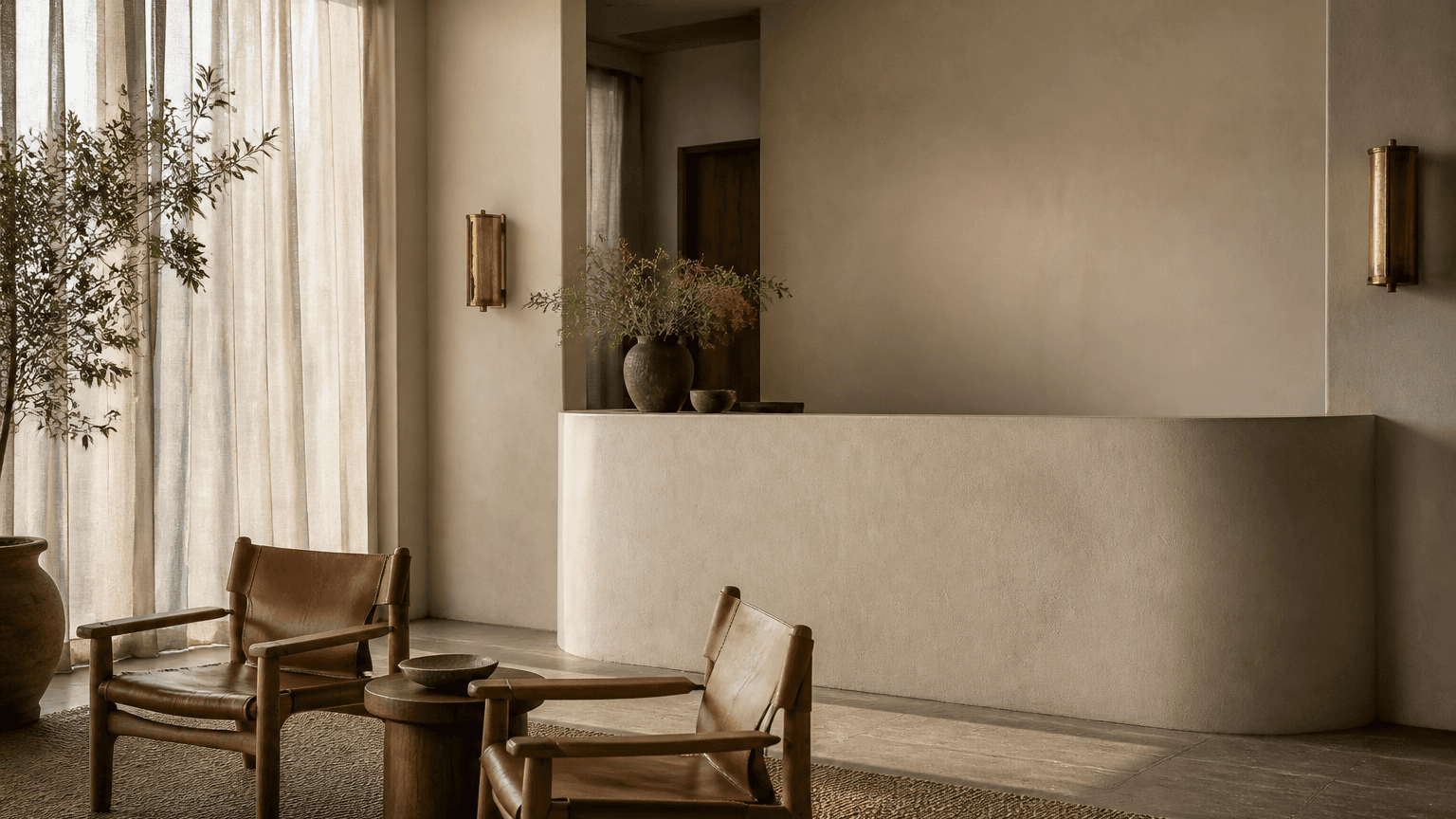
Lime plaster
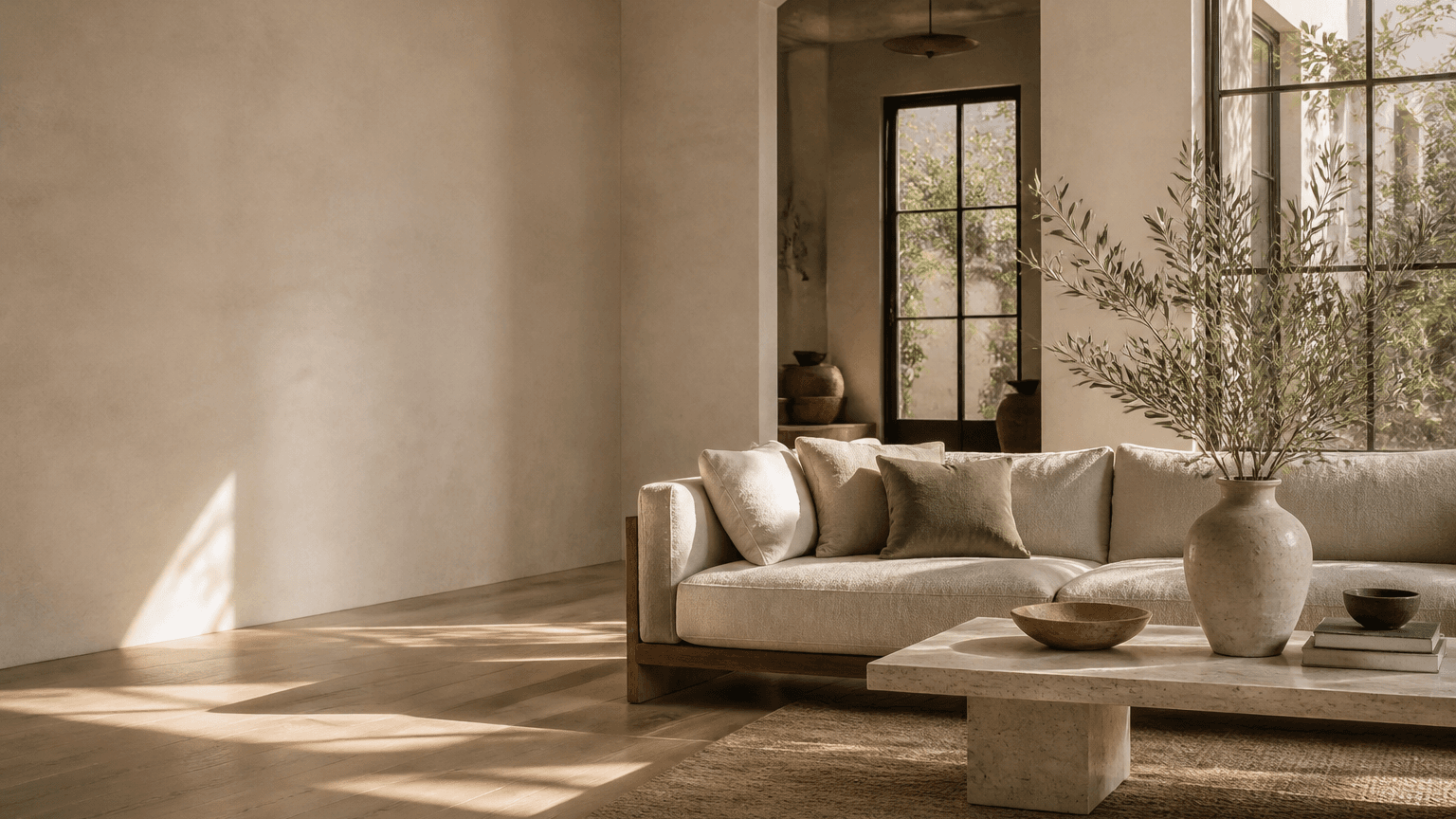
Three troweled coats over a prepared substrate. Lime moves light across a wall instead of bouncing it back, which is what softens a room at four in the afternoon. It is breathable, it takes a repair without a visible seam, and it never reads as a paint color.
- Three coat application, burnished finish
- Tinted in the mix, not on the surface
- Sample panels approved on site, in daylight
Upholstery, drapery, bedding
Belgian linen
Loose, heavy weaves that relax with use rather than fight it. We choose linen because it earns its creases. Slipcovers are cut where a family actually needs them, and the weave is specified by weight so a sofa in a living room and a chair in a study do not wear at the same rate.
- Washed weaves, 14 to 19 ounce
- Removable covers on the pieces that get used
- Undyed and low pigment tones by preference
Hardware, rails, lighting
Aged brass
Unlacquered, left to darken with the hands that use it. A lacquered finish looks perfect for two years and then chips. Living brass simply deepens. We keep it to the places that are touched, so the patina builds a record of the house instead of a fault list.
- Unlacquered solid brass, no plating
- Machined edges, no cast seams on show
- Matched across a floor, not a whole house
Counters, vanities, thresholds
Honed stone
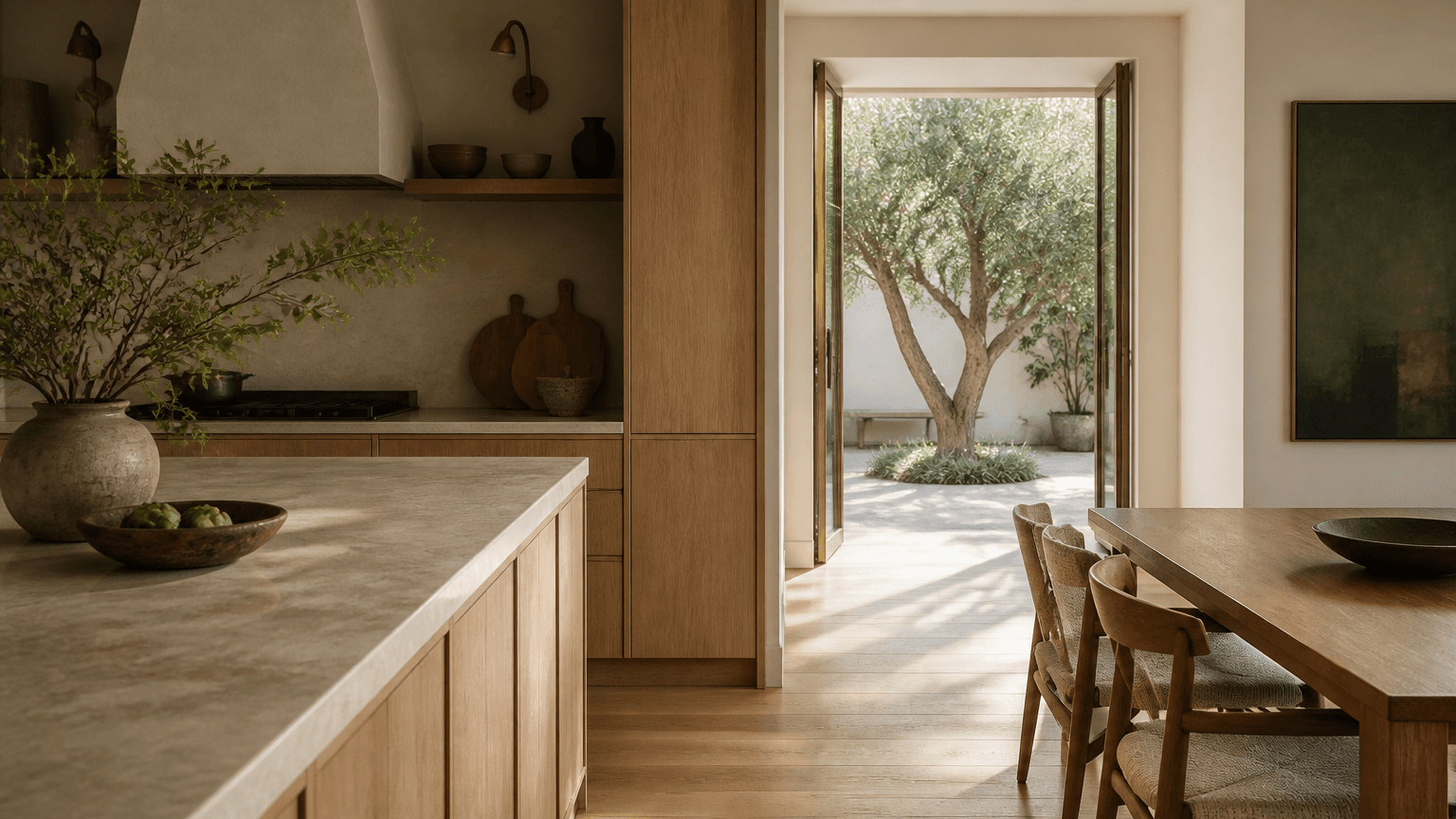
Matte limestone and quartzite, selected slab by slab at the yard so the vein lands where the eye lands. Honed rather than polished, because a matte surface hides daily wear and keeps a kitchen from glaring under a skylight. Slab layout is drawn before a single cut is made.
- Slabs viewed and tagged in person
- Honed finish, eased edges
- Vein layout drawn across every join
How We Specify
From the yard to your finish schedule
Material decisions are made early and written down. By the time a trade arrives on site, every surface has already been agreed, drawn, and priced.
- 01SourcedYards, mills, and workrooms we visit ourselves, mostly within a day of Los Angeles.
- 02SampledFull size panels and offcuts reviewed on site, in your own daylight, before approval.
- 03DetailedEvery edge, join, and transition drawn so the trades build from paper, not guesswork.
- 04RecordedA finish schedule listing each material, supplier, and repair method, handed over at the end.
The same four stages run on every project, residential or commercial.
Living With It
How these finishes age in a home
Natural materials ask for a little attention and give back decades. This is the rhythm we hand over with every completed project.
- First monthSettling inPlaster cures to its final tone and oak takes on the light of the room. We ask you to live with it before touching anything.
- Year oneFirst oilingFloors and oiled joinery are refreshed once. It takes a day and resets the surface for the years after it.
- Year threeLinen refreshCovers are washed or recut where a household has changed. The frames underneath stay exactly as built.
- Year fiveStudio walkthroughWe come back, look at how the house has worn, and note anything worth attending to. There is no charge for this visit.
Typical intervals for an Atelier Nord interior. Actual timing depends on use.
Illustrative schedule
Book a Consultation
See the samples in person
Consultations happen with the material box open. Bring your plans and we will put the actual oak, plaster, linen, brass, and stone on the table next to them.
- Response
- We reply to every request within two business days.
- Fit
- Requests are reviewed for project fit and studio capacity, so we cannot take on every enquiry.
- Where
- At our Frogtown studio, or on your site anywhere in Los Angeles.